
During the summer of 1900, Elmer S. Riggs, assistant curator of paleontology at the Field Columbian Museum, Chicago (now the Field Museum of Natural History), and field assistants Harold W. Menke and Victor H. Barnett, excavated dinosaur fossils at four quarries between Grand Junction and Fruita, Colorado. These quarries included:
- Quarry No. 12 > No Thoroughfare Canyon
- Quarry No. 13 > Riggs Hill, 5 miles west of downtown Grand Junction
- Quarry No. 14 > North of the mouth of Wedding Canyon, 2 miles south of Fruita
- Quarry No. 15 > Dinosaur Hill located 1 mile south of Fruita
At Quarry No. 12 the coraco-scapula and other specimens of a herbivore dinosaur, Camarasaurus grandis, were recovered from the Brushy Basin Member of the Morrison Formation.
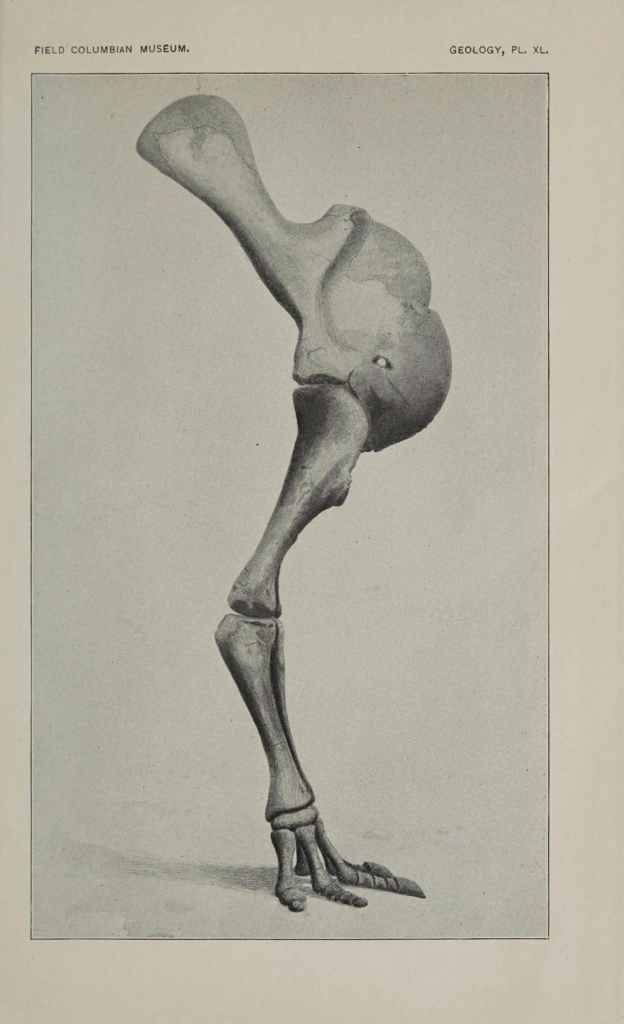
Sketch of the right fore leg of Camarasaurus grandis collected at Rigg’s No. 12 Quarry.(Riggs, 1901)

Skeleton of Camarasaurus lentus mounted at Yale Peabody Museum.
(Lull, 1930)
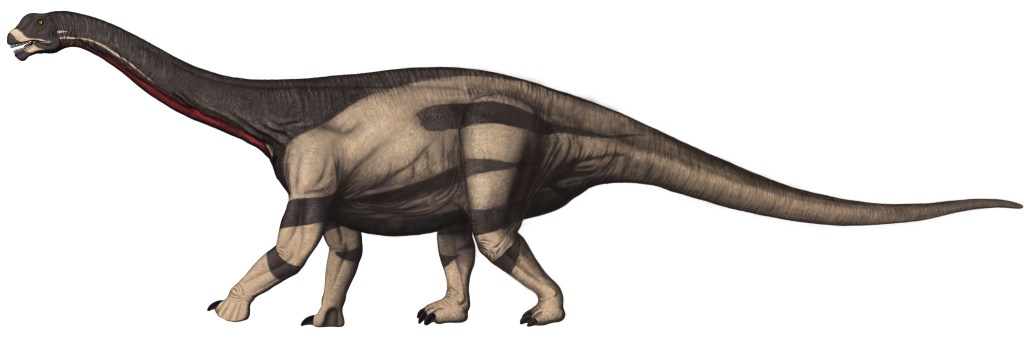
Camasaurus lentus
(NPS / Bob Walters and Tess Kissinger, 2025)
Site Geology
The Brushy Basin Member is the youngest and most widespread subunit of the Late Jurassic-age (approx. 145–155 Ma) Morrison Formation, characterized by brightly colored, thick bentonitic mudstones and sandstones. It represents a large, arid to semi-arid floodplain dotted with lakes, containing volcanic ash from distant western volcanoes.

Stratigraphy found near Quarry No. 12
(Lohman, 1981)

Geology found near Quarry No. 12
(Lohman, 1981)

Representative paleoenvironmental reconstruction of the Late-Jurassic.
(Torcida Fernández-Baldor et al., 2021)

Late-Jurassic paleogeography
(Scotese, et al., 2025)
Site Photos
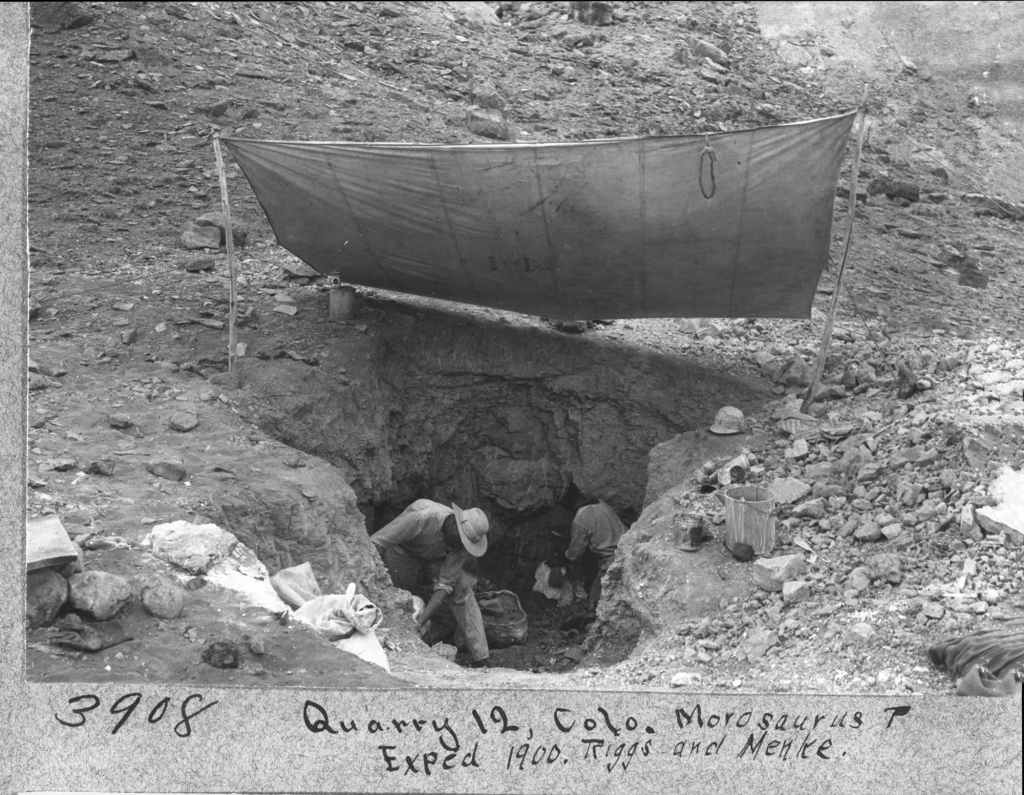
Victor Barnett and Elmer Riggs at Quarry No. 12.
Photographer: Harold W. Menke, Field Columbian Museum – Department of Geology
Courtesy, Chicago Field Museum – Photo No. CSGEO3908
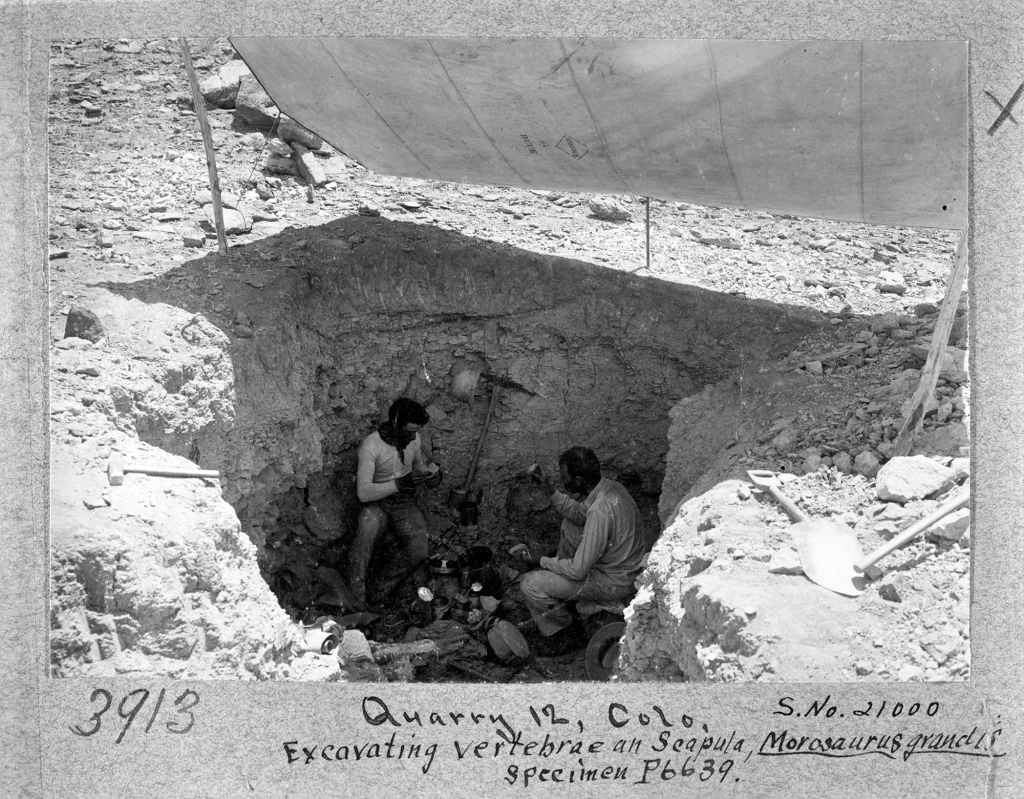
Elmer Riggs and Victor Barnett at Quarry No. 12.
Photographer: Harold W. Menke, Field Columbian Museum – Department of Geology
Courtesy, Chicago Field Museum – Photo No. CSGEO3913

Paleontologist camp in the Redlands, Colorado.
Photographer: Harold W. Menke, Field Columbian Museum – Department of Geology.
Courtesy, Chicago Field Museum – Photo No. CSGEO4030
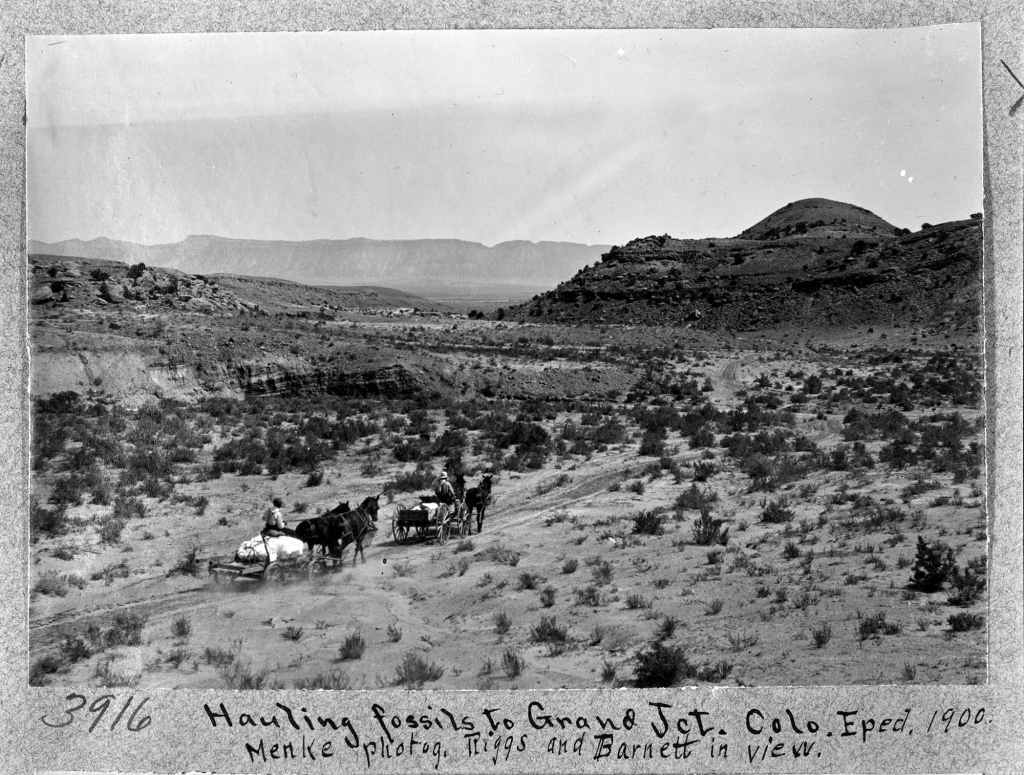
Victor Barnett and Elmer Riggs and hauling specimens in No Thoroughfare Canyon.
Photographer: Harold W. Menke, Field Columbian Museum – Department of Geology
Courtesy, Chicago Field Museum – Photo No. CSGEO3916
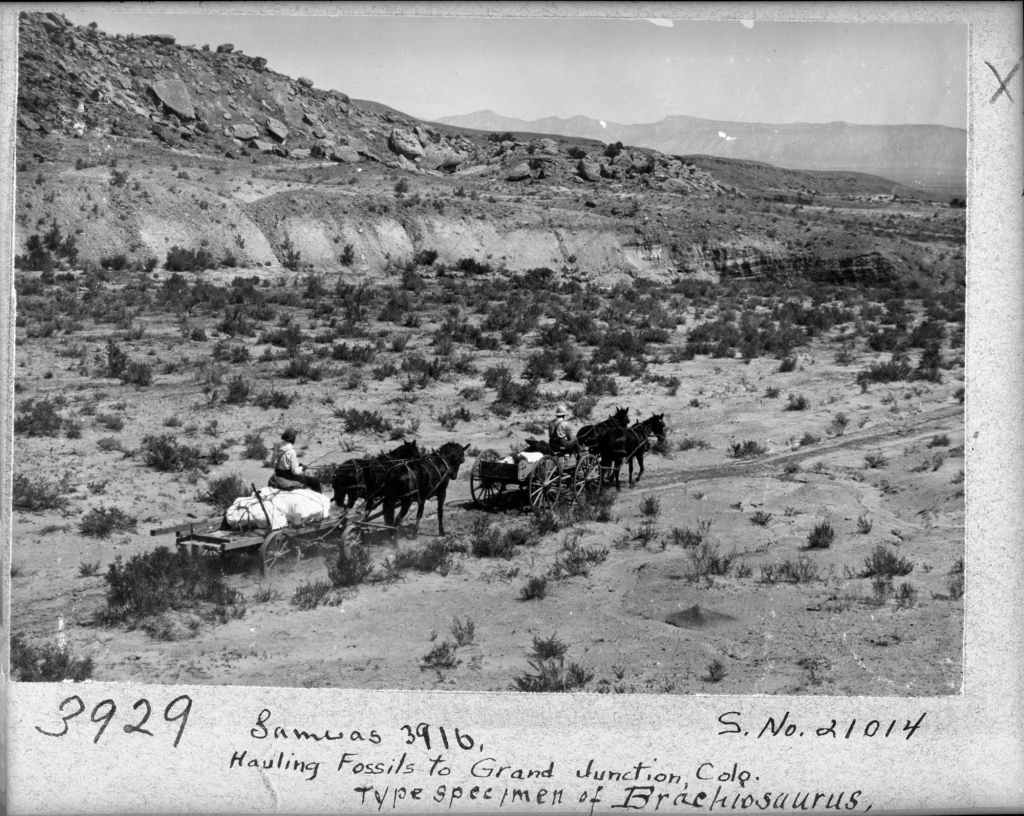
Victor Barnett and Elmer Riggs and hauling specimens in No Thoroughfare Canyon.
Photographer: Harold W. Menke, Field Columbian Museum – Department of Geology
Courtesy, Chicago Field Museum – Photo No. CSGEO3929
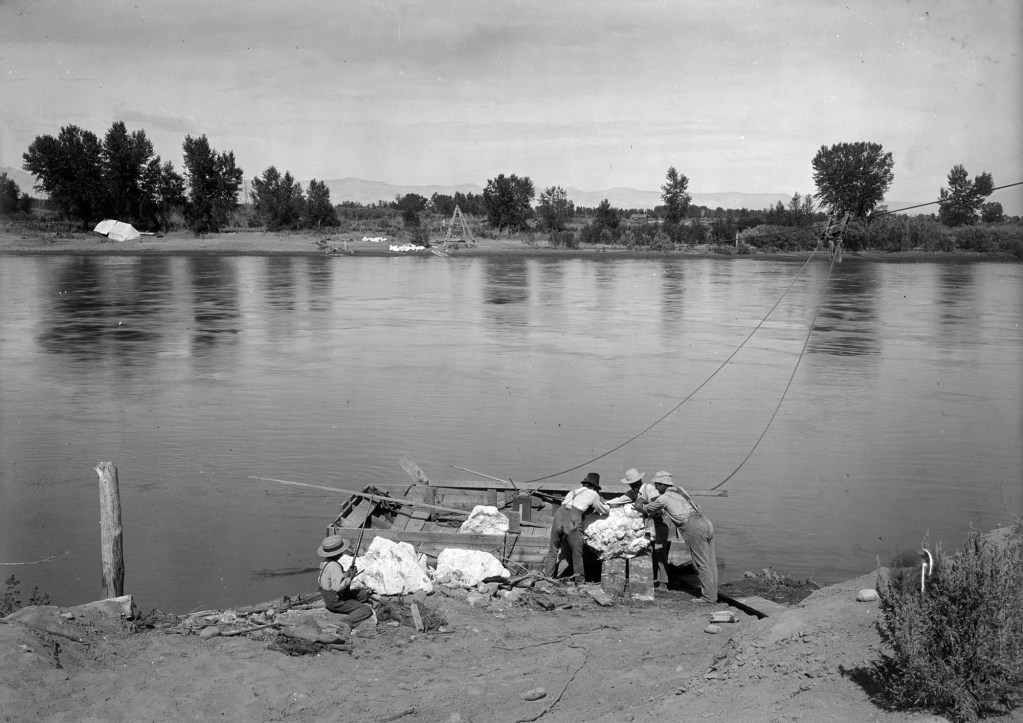
Men loading a ferry boat at Colorado River, near Quarry 15.
Photographer: Harold W. Menke, Field Columbian Museum – Department of Geology
Courtesy, Chicago Field Museum – Photo No. CSGEO3968

Packing specimens for transport to Chicago, along Colorado River near Fruita, Colorado.
Photographer: Harold W. Menke, Field Columbian Museum – Department of Geology
Courtesy, Chicago Field Museum – Photo No. CSGEO3952

The site of Quarry No. 12 now sits alongside the Monument Trail.
(photo by author, 2025)


Chicago Field Museum – Photo No. CSGEO3929, Then and Now
(point-of-view varies by ~750 to 100 feet)
References
Chenowith, W.L., 1991, Guidebook for Dinosaur Quarries and Tracksites Tour, Western Colorado and Eastern Utah: Grand Junction Geological Society, pp 17-18. https://gjgs.org/
Lohman, S.W., 1981, The Geologic Story of Colorado National Monument: U.S. Geological Survey Bulletin 1508, xii, 142 p., https://doi.org/10.3133/b1508
Lull, R. S, 1930, Skeleton of Camarasaurus lentus recently mounted at Yale: American Journal of Science, 5 (109), pp. 1-5. https://doi.org/10.2475/ajs.s5-19.109.1
Menke, H. W., 1900, Field Columbia Museum (Field Museum of Natural History, Chicago), Department of Geology: Photo Archives. https://dams.fieldmuseum.tech/portals/museum-media/
Riggs, Elmer S., 1901, The Forelimb and Pectoral Girdle of Camarasaurus (Morosaurus): Field Columbian Museum Publication 63, Vol. 1 No. 10, pp. 274-287.
Scotese, C.R., Vérard, C., Burgener, L., Elling, R. P., and Kocsis, A.T., 2025, Phanerozoic-scope supplementary material to “The Cretaceous World Plate Tectonics, Paleogeography, and Paleoclimate” from the PALEOMAP project: London Geological Society Special Publications Vol. 544, pp. 31-202. https://doi.org/10.1144/SP544-2024-28
Torcida Fernández-Baldor, F., Díaz-Martínez, I., Huerta, P. et al., 2021, Enigmatic tracks of solitary sauropods roaming an extensive lacustrine megatracksite in Iberia: Scientific Reports No. 11 Article 16939. https://doi.org/10.1038/s41598-021-95675-3
Walters, B. and Kissinger, T., National Park Service (NPS), 2025, Camarasaurus lentushttps://www.nps.gov/dino/learn/nature/camarasaurus-lentus.htm

Leave a Reply
You must be logged in to post a comment.