Some say writer’s block can put a writer down for months, even for life. Maybe that’s true. While authoring a mineral report or even the geologic history of a particular place or region is as comfortable as riding a bike, I have to say that having confidence to put together a first draft article for even a blog can be very challenging. Is that writer’s block? Maybe.
So how does one decide that he or she is ready to write something above and (or) beyond a technical document? I cannot answer that question other than by stating the obvious: you need to start someplace. That being said, having not taken a literature course for 30+ years and for the most part having primarily consumed and not created, I felt it was necessary to research writing techniques a bit. Learning how to communicate through writing is as hard as learning a new language, be it linguistic or programmatic in nature. Interestingly enough, I quickly discovered a great resource: Draft No. 4: On the Writing Process (2017) by John McPhee.
Every geologist knows who John McPhee is. For those who do not, McPhee is renowned for his ability to translate complex scientific concepts into engaging and accessible narratives, weaving scientific detail with narrative storytelling. McPhee’s writing often features in-depth interviews with geologists, field observations, and historical context, creating a rich tapestry that illustrates both the science and the human element behind geological research. Through detailed accounts and vivid descriptions, McPhee delves into the formation of mountain ranges, the movement of tectonic plates, and the profound impact of geological forces on the landscape.
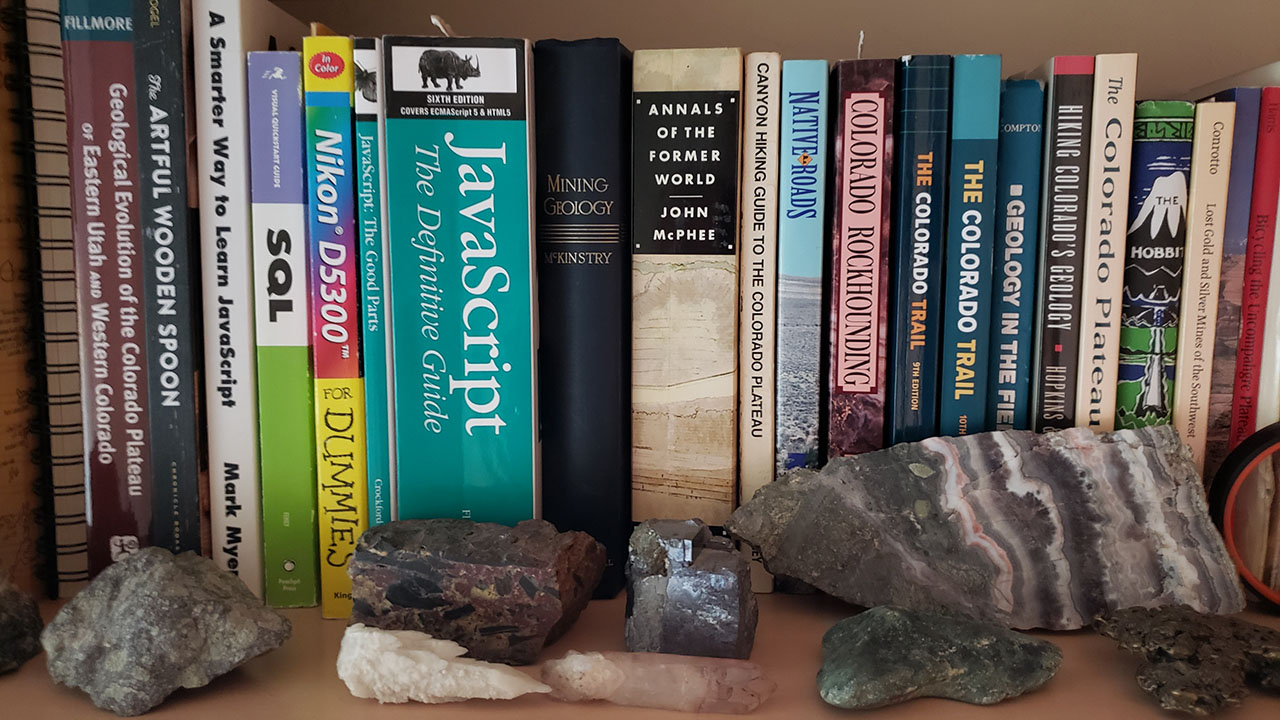
One of McPhee’s more famous books, Annals of the Former World (2000), is a compilation of four previously published books: Basin and Range (1981), In Suspect Terrain (1983), Rising from the Plains (1986), and Assembling California (1993), plus a final part, Crossing the Craton (1998), all of which provide a comprehensive exploration of the geology of North America. If you’re looking to try a book by John McPhee, Annals of the Former World is an excellent book to add to your library.
In Draft No. 4: On the Writing Process, McPhee offers a master class of sorts in long-form nonfiction writing through the presentation of a collection of insightful essays. The book is a blend of memoir, craft advice, and reflections on the writing life, drawing from McPhee’s extensive experience as a writer and teacher. While the book doesn’t claim to identify the ideal writing environment for everyone, it provides concrete steps that writers can take to produce a cleaner and more effective first draft. Draft No. 4 is a thoughtful exploration of writing as a craft, making it a valuable resource for both aspiring and experienced writers. As a geologist, I found that Draft No. 4 is a valuable resource for getting started. Key themes include:
- Writing Process: McPhee delves into his meticulous process of drafting and revising. He describes his method of drafting multiple versions of a piece, refining and honing the work through successive drafts. The book emphasizes the importance of persistence and attention to detail in writing.
- Structure and Form: McPhee discusses the significance of structure in writing, explaining how he constructs narratives and organizes content to maintain clarity and engagement. He shares his strategies for shaping complex information into accessible and compelling stories.
- Writing Techniques: The book offers practical advice on various aspects of writing, such as researching, interviewing, and integrating details into a narrative. McPhee provides examples from his own work to illustrate his points.
- Reflection on the Craft: McPhee reflects on his career and the evolution of his writing style. He offers insights into the challenges and rewards of the writing process, as well as the ways in which writing can be both an art and a craft.
Beyond Draft No. 4, I continued to learn communication skills through completion of a self-guided online course titled Practical Geocommunication designed to teach geoscientists how to effectively communicate geoscience topics to the public. Course curriculum includes:
- Case studies demonstrating our ethical obligation to communicate.
- Applicable analogies towards transposing geoscientific content into everyday concepts.
- Identifying distortions in mainstream media and deciding what strategies to effectively counter them.
- Social media engagement strategies towards the promotion of geoscience topics.
Practical Geocommunication is globally endorsed by leading geoscience establishments, including the American Institute of Professional Geologists.
Having dozens of posts at writing stages “Draft No. 1” through “Draft No. 3”, it’s time to work towards getting more posts “out there”!